
Key Takeaways
- The cheapest rate often creates the highest total cost once delays, rework, and founder attention are counted.
- Founders should evaluate technical partners on judgment, communication, and delivery systems, not price alone.
- Low-cost development is safest when the scope is tight and the business risk is low.
The quote is rarely the real cost
Founders usually start here for a sensible reason: cash is limited, runway matters, and a lower quote looks like discipline.
The mistake is assuming software cost is only the invoice.
It is not.
When a founder compares two freelancers, two agencies, or a contractor against an in-house hire, the real question is not "who is cheapest?" The real question is "who gets us to a stable launch with the least waste?"
That waste shows up in places founders feel immediately:
- delayed launch dates
- unclear handoffs
- missed edge cases
- extra management time
- broken deployments
- cleanup work after the first version
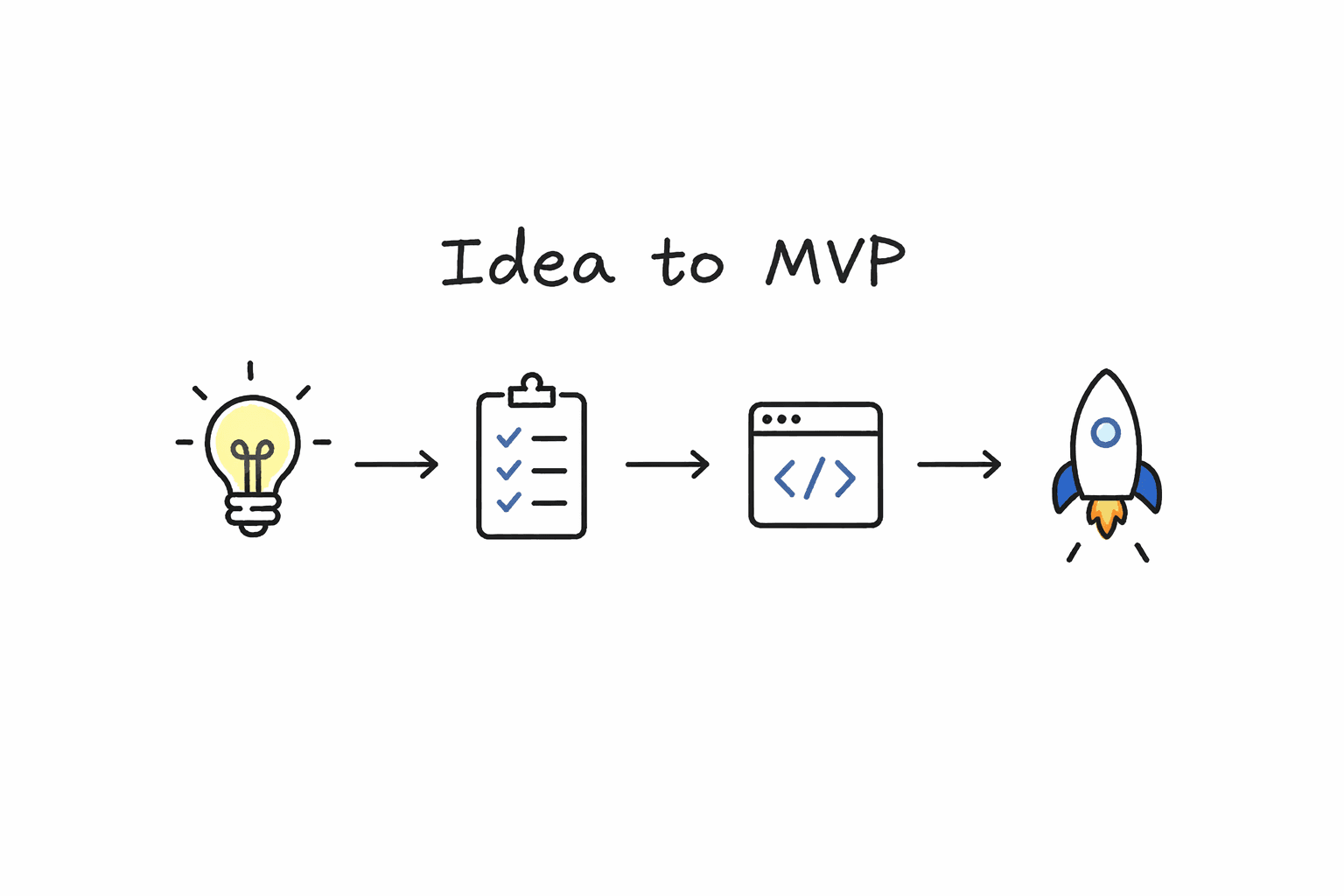
If you are still defining the MVP, the better place to start is a launch plan, not a cheap rate card. Our guide on going from idea to launch step by step explains why scope discipline does more for budget control than bargain shopping ever will.
Cheap developers usually create four categories of hidden cost
The most common failure mode is not total collapse. It is slow, expensive drag.
The project keeps moving, but every week gets harder. Features take longer to finish. Bugs reappear. The founder starts spending more time explaining than leading.
These are the four cost buckets that usually get ignored.
1. Rework cost
The first version ships with weak foundations, so the second phase starts with repair work.
Common examples:
- no clear separation between frontend and backend logic
- duplicated code for similar features
- weak validation around forms and APIs
- rushed database structure that makes reporting or permissions painful
- hard-coded values that block pricing, roles, or new environments
Founders pay for the original work and then pay again to make it usable.
2. Delay cost
Cheap teams often look fast in week one because they say yes to everything. The trouble shows up later when the roadmap is bigger than their delivery system.
That can mean:
- extra rounds of clarification
- more QA cycles
- release dates slipping quietly
- integrations taking longer than promised
- incomplete features being marked "done"
If an eight-week MVP becomes a fourteen-week cleanup project, the lost time matters as much as the extra invoice.
3. Management cost
Founders often forget to price their own time.
If the founder is spending ten extra hours each week:
- rewriting briefs
- reviewing basic architecture decisions
- chasing missing updates
- resolving misunderstandings between design and development
- testing unfinished work before every demo
then the business is already paying more than the proposal suggests.
This is why what founders get wrong about hiring developers matters so much. The wrong technical partner does not just write weaker code. They increase decision load across the whole company.
4. Opportunity cost
This is the cost founders feel last, but it may be the biggest.
When the product launches late, the business loses:
- customer feedback
- investor confidence
- sales conversations
- early revenue
- team momentum
In startups, delay is not neutral. It changes what you can learn and what you can sell.
A realistic founder scenario
Imagine a non-technical founder who wants to launch a B2B SaaS tool for operations teams.
They get two proposals:
- A low-cost team promises the full feature list in eight weeks.
- A more experienced team pushes back, cuts the scope down to one painful workflow, and proposes a ten-week launch with analytics, admin controls, and cleaner deployment.
The cheaper option feels attractive because it promises more features for less money.
But here is how it often plays out:
- week 2: requirements are still fuzzy because nobody challenged them
- week 4: the backend model already struggles with roles and permissions
- week 6: third-party integration work is slower than expected
- week 8: the product is visually demoable but not operationally ready
- week 10: the founder is hiring someone else to fix data issues, auth gaps, or deployment problems
The cheaper build did not save money. It only delayed when the real cost became visible.
The technical debt founders notice first
Founders do not usually complain in terms like "poor abstraction boundaries" or "weak observability." They complain in business terms:
- "Every small change is taking too long."
- "New developers need weeks to understand the code."
- "We are afraid to touch production."
- "Our admin tools are messy."
- "We cannot trust the data."
Those are all symptoms of technical debt created by weak delivery.
The most expensive problems are rarely dramatic bugs on day one. They are the structural issues that make the next six months slower than they should be:
- no documentation on environments or deployment steps
- missing test coverage around critical flows
- poor error handling in payments, auth, or integrations
- no rollback path during release
- brittle code generated quickly but never organized for maintenance
That last point is becoming more common with AI-assisted builds. A prototype can look finished long before it is truly production-ready, which is why we also wrote how to structure Loveable, v0, and vibe-coded apps for production.
When low-cost development is actually fine
Not every lower-cost option is a mistake.
A cheaper developer can be a good decision when:
- the task is tightly defined
- the business risk is low
- the work is short-lived or internal
- a senior person is reviewing architecture and code quality
- failure would be inconvenient, not expensive
Examples include:
- a one-page marketing site
- a small internal script
- a non-critical integration proof of concept
- a short UI polish sprint inside an already healthy codebase
The risk rises when the work involves:
- product scoping
- user auth and permissions
- payments
- core backend architecture
- multi-step workflows
- production deployment
- anything customer-facing that affects trust
That is the line founders need to see clearly.
How to evaluate a technical partner beyond price
A strong partner usually gives you more signal before the project starts.
They should be able to explain:
- what not to build yet
- where complexity is hiding
- what the launch timeline depends on
- which parts of the stack affect future cost
- how they handle QA, deployment, and post-launch fixes
Good questions to ask in discovery:
- What would you cut from version one if we needed to launch faster?
- Which part of this product is most likely to cause rework later?
- How do you structure handoff, documentation, and deployment?
- What assumptions in this brief are still risky?
- What would make you say this project is not ready to estimate yet?
Weak partners usually answer these with confidence theater. Strong partners answer with tradeoffs.
A Better Buying Lens
If a team only sells hours, compare rates. If a team sells clarity, delivery systems, and commercial judgment, compare total business outcome instead.
Good value is speed plus durability
Founders should not overcorrect and assume the highest quote is automatically the safest choice either.
The right partner is usually the one who can do three things at the same time:
- reduce scope without reducing buyer value
- ship a version that can survive real usage
- keep the next phase of the product maintainable
That is what real value looks like.
If you want to sense-check a budget before you hire anyone, the SaaS Pricing Calculator / MVP Estimator is a useful place to model how complexity, urgency, and feature count change the cost conversation.
And if you want to see the standard of work a team is aiming for, our projects page is a better indicator than a cheap headline rate.
The founder takeaway
Cheap developers are not automatically bad. The problem is buying low price when the project actually needs judgment, systems, and ownership.
If the work is simple, short, and easy to supervise, a cheaper option may be perfectly rational.
If the work involves your launch timeline, your customer experience, or the architecture your business will depend on next quarter, the math changes fast.
In that situation, founders should buy momentum, not bargain labor.
If you want a second opinion on scope, hiring, or whether a proposal is hiding rework risk, contact LaunchFast. We can help you decide whether the cheaper option is genuinely efficient or just cheap on paper.
Read Next
If this topic is relevant to your roadmap, these related articles are worth reading next.
From Idea to MVP in 30 Days: Exact Process We Use to Launch Startup Products
The founder-friendly path from rough concept to live product, including validation, MVP scope, stack choices, launch sequencing, and where execution usually goes wrong.
What Founders Get Wrong About Hiring Developers
Why startup hiring goes sideways: vague scope, bad communication, resume bias, and chasing the cheapest rate instead of real output.
From Vibe-Coded Prototype to Production App: What Most Founders Get Wrong
How to turn a fast AI-generated prototype into a stable product with better architecture, auth, data boundaries, observability, and release discipline.
Next Step
Hiring for an MVP, rebuild, or startup launch?
Talk to LaunchFast if you want a technical partner who can scope clearly, ship quickly, and avoid the rewrite cycle that cheap development often creates.
FAQ