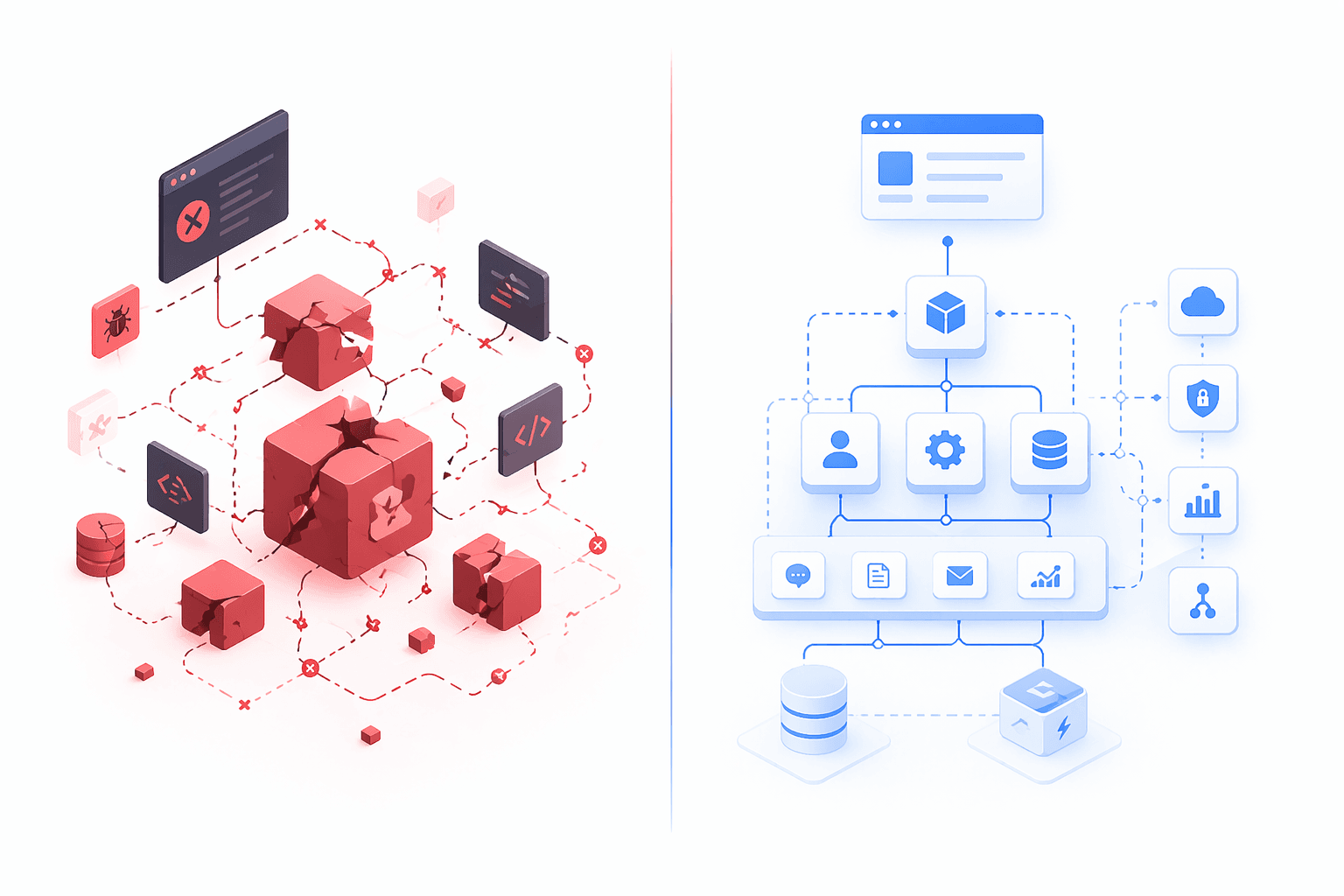
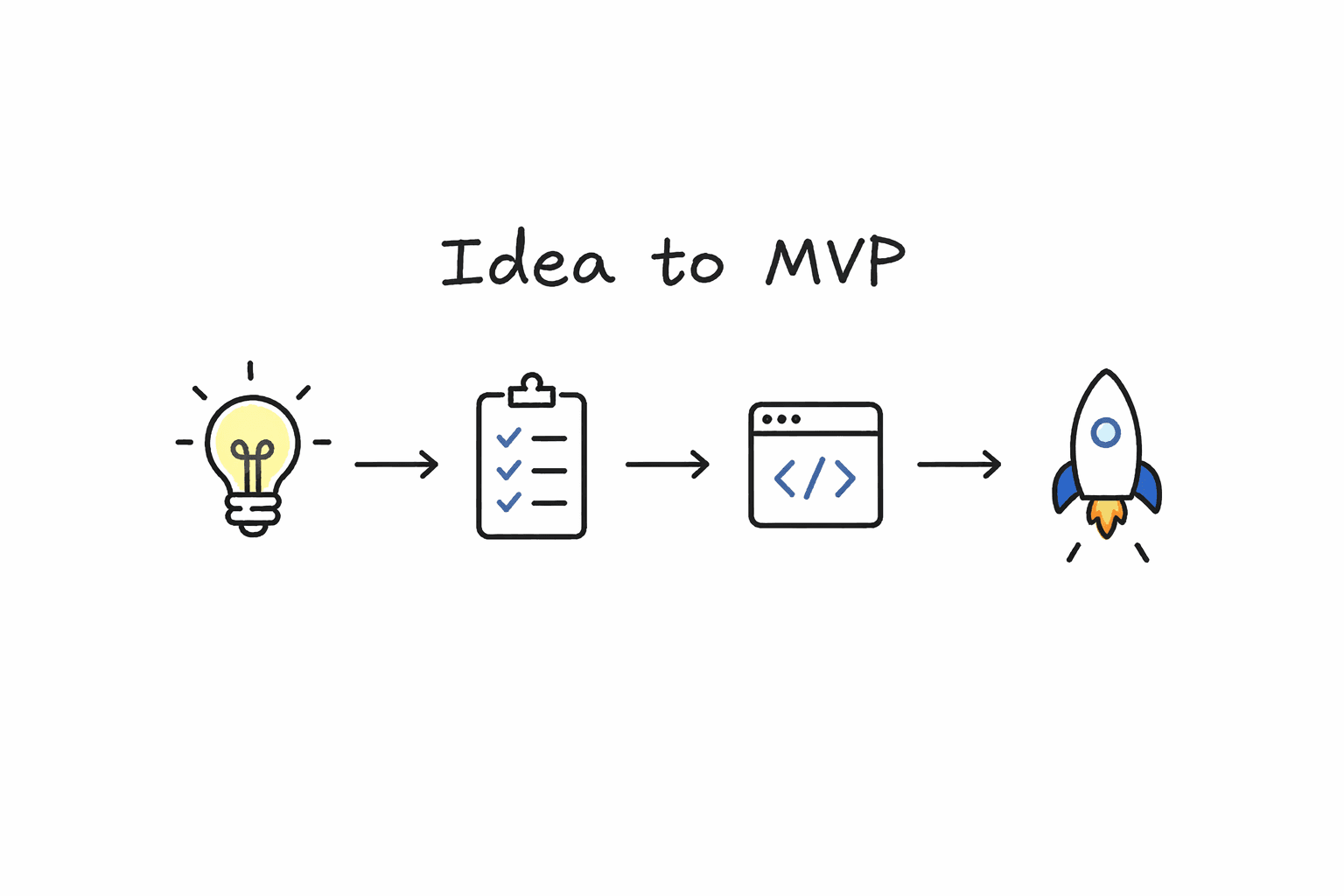
Key Takeaways
- The fastest launch comes from solving one painful workflow well, not from packing version one with extra features.
- Most MVP budget mistakes come from weak scope control, not from choosing the wrong framework.
- A good launch plan covers validation, build sequencing, release readiness, and post-launch feedback loops.
Start with the buyer problem, not the feature wishlist
Most startup products lose weeks before development begins.
The pattern is familiar:
- the founder has a strong vision
- the feature list grows every time someone gives feedback
- the scope is still fuzzy when estimates are requested
- the team starts talking about stack before the business case is tight
That sequence usually leads to a slower launch and a more expensive MVP.
The better starting point is brutally simple:
- Who exactly is the first user?
- What expensive or annoying problem are they trying to solve?
- What result would make them trust the product quickly?
- What is the smallest version that can deliver that result?
If those four answers are clear, everything downstream becomes easier: scope, pricing, design, stack choice, and launch messaging.
If they are not clear, you do not have a product plan yet. You have an ambition.
Founder's Rule
If the first version cannot be explained in one sentence, it probably cannot be shipped quickly either.
Validate before you build, but validate the right things
Founders often hear "validate first" and assume that means building nothing until demand is proven perfectly.
In practice, you usually need enough product thinking to test whether the business direction is real.
Before development starts, try to validate these points:
- the pain is frequent, not occasional
- the pain is expensive enough to justify action
- the target user already uses a workaround
- the target user can explain the problem clearly
- there is a believable path to charge for the result
This can happen through:
- customer interviews
- manual service delivery
- clickable prototypes
- waitlist or demo landing pages
- sales conversations before code
You do not need perfect certainty. You do need enough evidence to avoid building an elaborate product for a weak problem.
Turn the idea into a narrow commercial offer
Before you choose tools, turn the product into something sellable in plain language.
That means being able to say:
- who the product is for
- what workflow it improves
- what outcome it creates
- why that outcome matters financially or operationally
This matters because product decisions are commercial decisions.
A vague offer creates a vague MVP. A clear offer makes it easier to cut features without weakening the business.
Scope the MVP around one complete workflow
An MVP is not a miniature version of the full roadmap. It is the smallest product that can complete one meaningful job from start to finish.
That usually means choosing:
- one target user
- one core workflow
- one primary success metric
- one onboarding path
For example, version one might include:
- user signup and login
- one dashboard
- one workflow that solves the core problem
- simple billing or lead capture
- admin visibility for support
It probably does not need:
- deep reporting
- complex role matrices
- enterprise permissions
- extensive automation
- mobile apps on day one
- multiple adjacent use cases
Founders overspend when they confuse future differentiation with day-one necessity.
What founders get wrong at the scoping stage
There are a few mistakes that create most MVP waste.
Mistake 1: Building for every future customer
Your first product should win one small market, not vaguely appeal to everyone.
Mistake 2: Estimating by screen count
Two products can each have eight screens and have completely different complexity depending on roles, integrations, and backend rules.
Mistake 3: Hiring before the scope is clear
If the brief is weak, the estimate will be weak too. That is one reason cheap developers often cost more long-term: the project starts with false certainty, then gets expensive when reality catches up.
Mistake 4: Treating launch as the finish line
Launch is the start of learning, not the end of the project.
Choose the execution model that matches your stage
The right build setup depends on founder involvement, budget, and speed pressure.
Common options:
Founder-managed freelancers
This can work when the scope is clear and the founder or an advisor can coordinate design, engineering, QA, and release decisions.
In-house early team
This is strongest when the company already has product clarity and enough budget to hire for both speed and depth.
Agency or product partner
This is often the fastest route when founders need scoping help, delivery systems, and cross-functional execution together.
What matters most is not the label. It is whether the team can reduce ambiguity instead of amplifying it.
If you are comparing options, use LaunchFast as the standard you want any partner to meet: clear scoping, production-minded execution, and a realistic path from MVP to growth.
Pick the stack after the workflow is clear
A lot of founders ask for the startup tech stack too early.
The right order is:
- define the workflow
- define the user roles and data model
- define the integrations
- define performance and security needs
- then choose the stack
For most startups, the best stack is not the most novel one. It is the one that makes shipping, hiring, and maintenance easier.
What affects cost and speed most:
- whether the app needs custom backend logic
- whether the product has multiple user roles
- whether billing is simple or nuanced
- whether there are external APIs and webhooks
- whether the product needs real-time behavior
- how much analytics and admin visibility the team needs at launch
Most early-stage SaaS products benefit from boring, proven choices. The stack should help the team move, not impress other developers.
Price the MVP by risk, not by page count
Founders often ask for pricing based on feature count or screen count. That misses the real drivers.
The real cost drivers are:
- custom workflows
- third-party integrations
- data complexity
- user roles and permissions
- automation logic
- payment or compliance requirements
- speed expectations and release discipline
Two products can both have eight screens and still have dramatically different effort.
If you want a useful cost conversation, ask:
- what can be deferred without hurting the buyer outcome
- what must be production-ready at launch
- where manual operations are acceptable in phase one
- which parts of the roadmap are assumptions, not necessities
The SaaS Pricing Calculator / MVP Estimator is useful here because it frames pricing around complexity, urgency, and scope instead of wishlists.
A realistic launch timeline for many startup products
Not every product fits the same schedule, but for many founder-led web products a realistic path looks like this:
Week 1 to 2: product definition
- customer and workflow clarity
- scope cuts
- wireframes or lightweight UX planning
- technical approach and release plan
Week 3 to 6: core build
- authentication
- main workflow
- core backend and data model
- admin visibility
- integration setup
Week 7 to 9: stabilization
- QA
- analytics
- onboarding friction fixes
- error handling
- deployment preparation
Week 10 and beyond: launch and iteration
- real users
- support feedback
- conversion friction
- roadmap updates based on usage, not guesses
Some products launch faster. Marketplace products, workflow-heavy internal tools, or systems with payment logic often take longer.
Launch in stages, not all at once
This is how founders avoid spending months polishing features nobody asked for.
Your first launch does not need every report, every automation, or every permission nuance. It needs enough value to start real customer conversations.
That is also how revenue shows up sooner. Our post on how SaaS teams reach first MRR faster goes deeper on why commercially clear launches beat oversized roadmaps.
Where agencies help the most
Good agencies are not just extra hands. They are useful because they compress three problems at once:
- product ambiguity
- execution coordination
- production readiness
That matters most when founders need:
- fast scoping before the budget gets wasted
- design and engineering aligned from the start
- realistic technical tradeoffs
- launch support instead of just code delivery
The strongest engagements do not begin with "tell us every feature." They begin with "what has to work for this launch to matter?"
What should be true before you press launch
Before you ship, check that these basics are covered:
- onboarding is clear
- analytics are installed
- support and admin visibility exist
- the product handles obvious failure states
- the release can be rolled back safely
- the core metric for learning is defined
That last point matters. If you do not know what counts as a successful first launch, the team will struggle to prioritize the next phase.
The real goal is useful momentum
The goal is not to launch everything. The goal is to launch something valuable, learn quickly, and keep the company moving.
If your product solves one painful problem well, you can expand from a stronger position. That is a much better outcome than spending months building a giant version one that reaches the market too late.
The founders who move fastest are rarely the ones with the biggest roadmap. They are the ones who know what the buyer needs first, what can wait, and what the product must prove before more money gets committed.
Once that first version is live, the next challenge is making sure the backend can handle success without forcing a rewrite. That is where how we built a scalable backend handling 1M requests becomes the right next read.
If you want help scoping the MVP, choosing the right build path, or pressure-testing your launch timeline, contact us. If you want to see the kind of products we help ship, browse our projects.
Read Next
If this topic is relevant to your roadmap, these related articles are worth reading next.
How We Built a Backend That Handles 1M Requests Without Scaling Costs Exploding
What it takes to support 1M requests without panic: modular architecture, protected databases, background jobs, observability, and better scaling tradeoffs.
What Founders Get Wrong About Hiring Developers
Why startup hiring goes sideways: vague scope, bad communication, resume bias, and chasing the cheapest rate instead of real output.
Why Cheap Developers Cost Startups $50K+ Later (Real Mistakes Founders Make)
A low quote can become the most expensive option once delays, rework, weak architecture, and founder time are counted properly.
Next Step
Need help turning your idea into a launchable MVP?
Talk to LaunchFast if you need product strategy, design, and development aligned around a realistic launch plan instead of a vague feature wishlist.
FAQ