Key Takeaways
- You do not need a giant system on day one, but you do need architecture that can scale without a rewrite.
- Caching, queues, clear database access patterns, and observability usually matter more than early microservices.
- Backend decisions are business decisions because latency, outages, and data issues directly affect trust and revenue.
Scale problems usually start before the traffic spike
When founders hear "1M requests," they often picture a giant platform with a DevOps team, a microservices diagram, and a frightening cloud bill.
That is usually the wrong mental model.
The real goal is not to build a giant system. It is to build a backend that can absorb growth without forcing panic decisions every time usage jumps.
The specific stack can vary by project, but the principles do not change much. To support serious traffic, we focus on a few disciplined choices early:
- keep the data model clean
- protect the database from unnecessary work
- move slow tasks out of the request path
- add observability before production gets noisy
- keep the architecture simple enough to ship and reason about
Those decisions matter more than buzzwords because most startup scaling failures are not caused by using the wrong trendy technology. They are caused by avoidable pressure in the wrong part of the system.
Why founders should care about backend architecture early
Founders sometimes think backend architecture is something to worry about after traction.
That is only half true.
You do not need to engineer for huge scale before launch. But you do need an architecture that can grow without becoming a rewrite project the moment the product starts working.
Why this matters commercially:
- a slow product hurts activation
- outages hurt trust and retention
- messy backend code slows every future feature
- unobserved failures create support costs
- rushed rewrites pull the team away from growth work
This is the same principle we use in from idea to launch: early speed matters, but it only helps if the thing you launch can survive real usage.
What usually breaks first as traffic rises
Founders often assume the app server is the first thing to fail.
In practice, the earliest pain points are usually:
- database hotspots from repeated reads or missing indexes
- heavy synchronous jobs inside API requests
- bursty third-party integrations and webhook retries
- missing caching on read-heavy endpoints
- no visibility into latency, failures, or queue backlog
That is why backend scaling is really about removing pressure from the core request path.
The architecture pattern we trust most at this stage
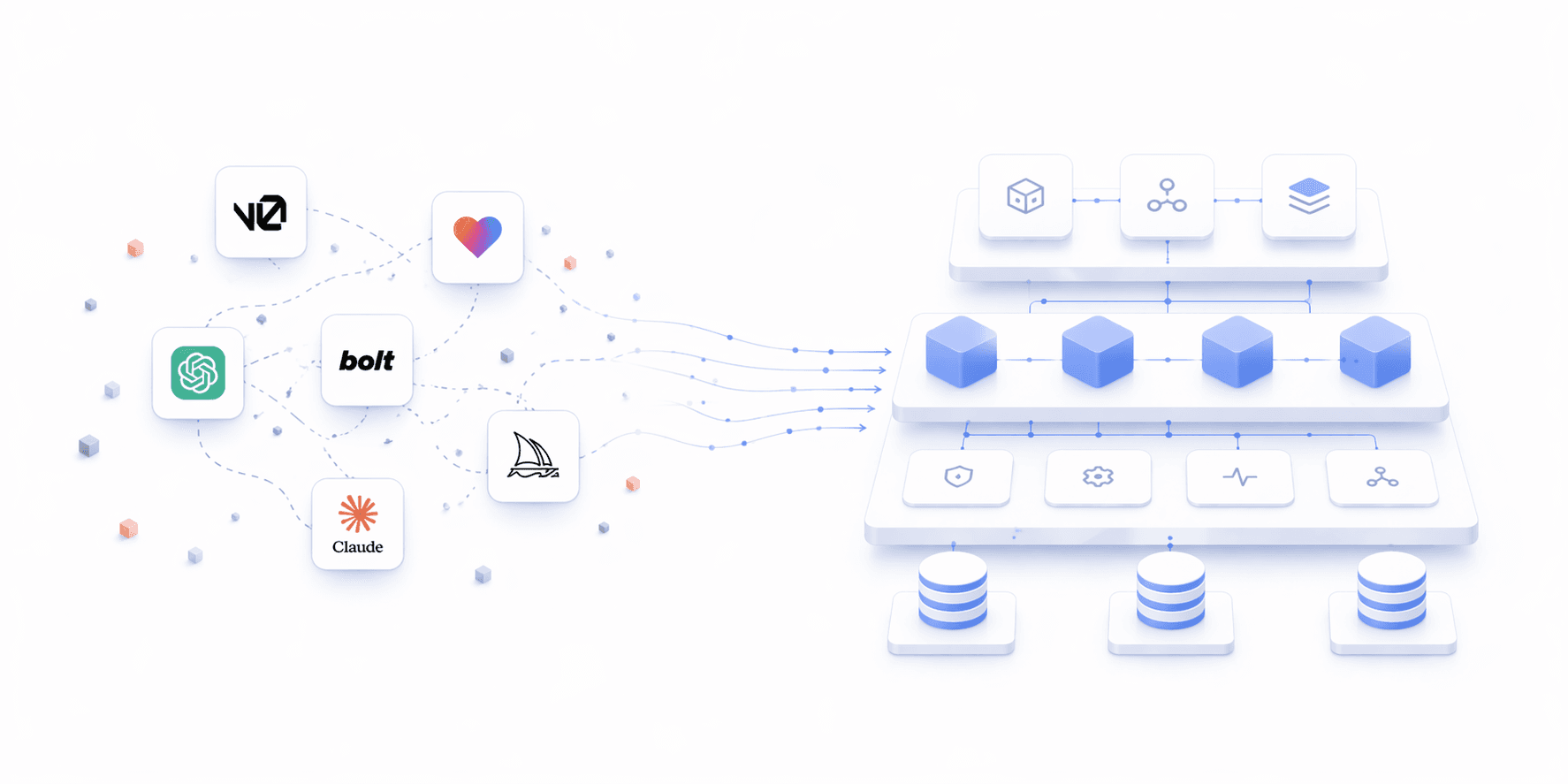
For many startup products, the safest architecture is not a microservices fleet. It is a well-structured modular monolith with a few production-minded supporting systems.
That usually includes:
- an application layer with clear domain boundaries
- a relational database with disciplined schemas and indexes
- Redis or similar caching where repeated reads justify it
- queue workers for background jobs
- object storage for files and exports
- monitoring, logging, and alerts from the start
This is not glamorous. It is effective.
The advantage is that one team can still move fast while the system stays understandable.
Protect the database before it becomes the bottleneck
Most scaling problems are database problems wearing different clothes.
If every request hits the database directly, traffic growth becomes painful quickly. Even if the servers stay up, response times drift, costs rise, and the product starts feeling unreliable.
So one of the first priorities is making sure the database does not carry unnecessary work.
That usually means:
- indexing queries users hit most
- caching repeated reads
- reducing over-fetching
- separating transactional workloads from reporting workloads
- avoiding N+1 patterns and chatty API design
Founders do not need to become database experts. They just need to understand that growth gets expensive when every new user adds pressure to the same bottleneck.
Move slow work into queues
This is one of the simplest changes that separates fragile products from scalable ones.
If a task does not need to finish while the user waits, it should usually be handled asynchronously.
That includes work like:
- sending emails
- generating reports or exports
- processing uploads
- syncing data to external systems
- running AI tasks
- retrying webhook deliveries
Queues reduce pressure on the core application and make the product feel faster even when the system is doing more work in the background.
What Founders Should Watch
When every feature becomes synchronous, the product gets slower, the infrastructure bill rises, and scaling gets expensive much earlier than it should.
Caching is often a cheaper scaling tool than bigger infrastructure
Founders sometimes hear "scale" and think "more servers."
Often, the smarter move is to avoid unnecessary work first.
If a dashboard, pricing table, activity feed, or analytics summary is read far more often than it changes, caching can remove a huge amount of waste.
Good caching is not about being clever. It is about being deliberate:
- cache what is expensive to compute
- invalidate predictably
- do not let stale data create trust issues
- measure the effect
This is one reason scaling can be cost-aware. You do not always need more infrastructure if you first reduce the work each request performs.
Add visibility before you need it
A surprising number of teams wait until production trouble shows up before they add real monitoring. That is too late.
If you want a backend to handle high request volume, you need visibility into:
- Error rates
- Slow endpoints
- Queue backlog
- Database pressure
- Third-party failures
Without that, the team ends up guessing.
And when the business depends on uptime, guessing is expensive.
At minimum, the team should be able to answer:
- what just failed
- where it failed
- how often it is failing
- whether it is getting worse
- which users or tenants are affected
If you cannot answer those questions quickly, you do not really have production control yet.
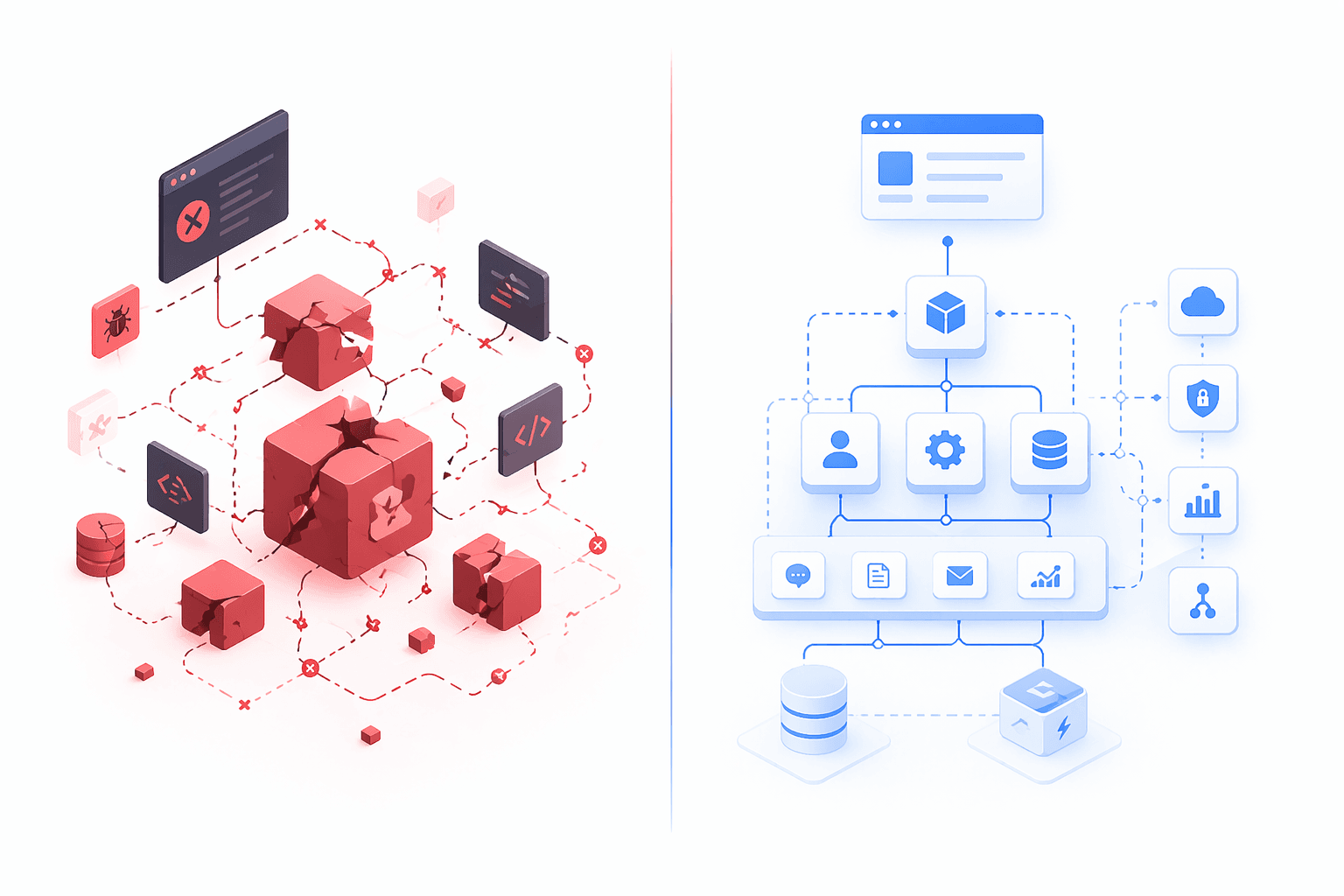
Overengineering and underengineering both hurt
Startups can get scaling wrong in two directions.
Overengineering
This looks like:
- services split too early
- complex infrastructure before product-market signal
- abstractions that add cognitive load without removing risk
The result is slower delivery and unnecessary operational overhead.
Underengineering
This looks like:
- business logic tangled across routes and handlers
- no queues for obviously slow jobs
- database access without discipline
- no observability
- deployment procedures that depend on memory and luck
The result is fast early output followed by expensive cleanup.
For most startups, a well-structured application with strong boundaries, good background processing, and clean infrastructure can go very far before a service split becomes necessary.
The mistake is not staying simple. The mistake is staying messy.
A boring architecture with clear modules is easier to ship, easier to monitor, and easier to grow than a trendy architecture that introduces operational overhead too early.
This is the same principle behind how to build a scalable SaaS backend: grow into complexity only when the product actually earns it.
What founders and CTO-minded buyers should ask before launch
If your product could grow quickly, these are useful questions to ask your team:
- What happens if traffic doubles next month?
- Which endpoints are most expensive today?
- What work should be asynchronous but is still blocking user requests?
- How do we know when the database is under pressure?
- What is the rollback path if a release goes wrong?
- Which parts of the backend would force a rewrite if the product succeeds?
Strong teams can answer these without hand-waving.
Backend scale matters because it protects growth
The business reason to build a scalable backend is not technical vanity. It is momentum.
If the product gets slower every time marketing works, growth becomes painful. If a customer onboarding push creates outages, the business loses trust at exactly the wrong moment. If the codebase becomes fragile before the company has real leverage, every roadmap decision gets more expensive.
That is why technical buyers pay attention to backend thinking. It signals whether a team can build serious systems, not just polished demos.
And if your current product began as a quick prototype or AI-assisted build, the next useful read is how to structure Loveable, v0, and vibe-coded apps for production. A lot of scaling pain starts with structure that was never designed for real traffic.
If you want help pressure-testing a backend before growth exposes the weak spots, contact LaunchFast. You can also browse our projects to see how we approach production-minded delivery.
Read Next
If this topic is relevant to your roadmap, these related articles are worth reading next.
From Idea to MVP in 30 Days: Exact Process We Use to Launch Startup Products
The founder-friendly path from rough concept to live product, including validation, MVP scope, stack choices, launch sequencing, and where execution usually goes wrong.
From Vibe-Coded Prototype to Production App: What Most Founders Get Wrong
How to turn a fast AI-generated prototype into a stable product with better architecture, auth, data boundaries, observability, and release discipline.
How to Build a Scalable SaaS Backend
How founders should think about multi-tenant backend design, startup tech stack choices, and scaling a SaaS product without overengineering it.
Next Step
Need production-ready backend architecture for your product?
Talk to LaunchFast if you need a backend that can support growth, stay observable in production, and avoid a painful scale-triggered rewrite.
FAQ