
Key Takeaways
- A scalable SaaS backend starts with clean tenant boundaries and a clear data model.
- Queues, observability, and integration discipline matter earlier than most founders expect.
- You can stay simple for a long time if the system is structured cleanly from the start.
Start with the shape of the business
A scalable SaaS backend should reflect the business model, not just the feature list.
That means founders need to think early about:
- Who the tenants are
- What data belongs to each tenant
- Which users can access what
- How billing and plans affect features
- Which workflows will become heavier as usage grows
If those foundations are unclear, the product may launch, but scaling becomes messy later.
This is especially important if you plan to build a SaaS MVP first and grow it into a larger platform. The backend choices you make early should not block pricing changes, user-role expansion, or new workflows later.
Keep tenant boundaries clean
In SaaS, bad boundaries create painful problems.
If permissions are messy or data ownership is unclear, everything gets harder:
- Reporting
- Access control
- Auditing
- Enterprise sales
- New feature rollout
Clean tenant modeling is not glamorous, but it makes growth much easier.
It is one of the first things we think about when founders want a product that can start small and still support serious usage later.
Build for async work early
Most SaaS products eventually need background processing.
That includes:
- Imports
- Exports
- Notifications
- Billing sync
- AI tasks
- Third-party data pulls
If every one of those actions happens during the live request, the product becomes slower and more fragile as usage increases.
That is why a scalable SaaS backend usually includes queues earlier than founders expect. Not because the system is giant, but because the user experience needs protection.
Treat integrations like first-class product infrastructure
For many SaaS businesses, integrations are not side features. They are part of the core value.
That means the backend should be designed to handle:
- Webhooks
- Retry logic
- Failure states
- Rate limits
- Logging and traceability
If integrations are bolted on carelessly, support burden rises fast.
This becomes even more important when the roadmap includes automation or marketplace behavior. A product that needs payments, messaging, or third-party sync should be designed around those realities early, especially if the longer-term plan includes a marketplace website or partner ecosystem.
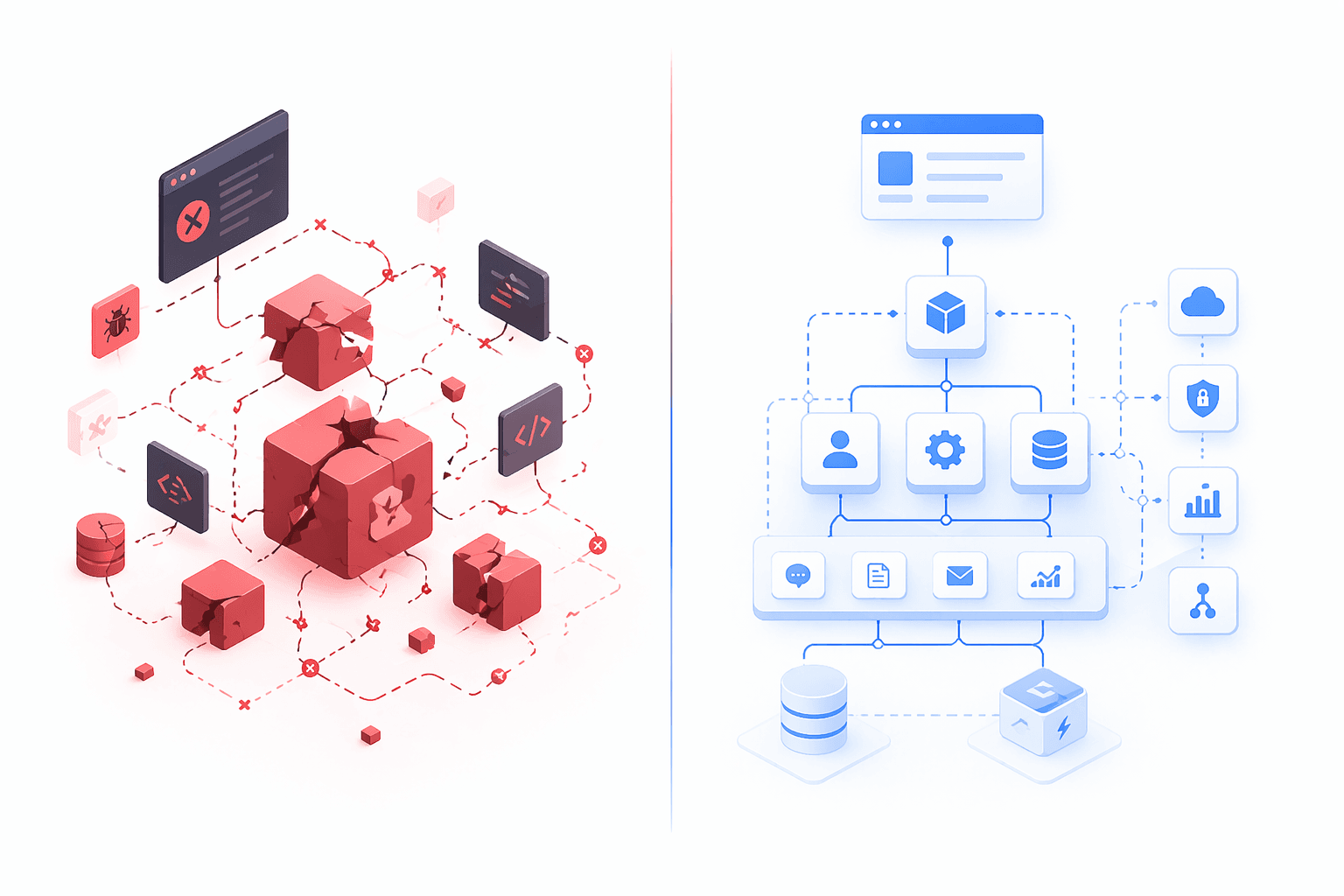
Simple Does Not Mean Fragile
You do not need a huge architecture to build something scalable. You need clean boundaries, background processing, and enough visibility to trust the system as it grows.
Pick a startup tech stack your team can actually move with
Founders sometimes ask for the most scalable stack as if there is one universal answer.
There is not.
The best startup tech stack is the one that balances:
- Speed to launch
- Availability of talent
- Ease of maintenance
- Infrastructure simplicity
- Room to grow
That is why we usually recommend proven tools with strong ecosystems instead of trendy combinations that are harder to hire for later.
The business wins when shipping stays fast and the system stays understandable.
Scale by removing pressure, not by adding complexity
A backend becomes scalable when it can absorb demand without every new customer creating operational pain.
That usually happens through practical steps:
- Caching read-heavy paths
- Offloading slow work to queues
- Watching failures in real time
- Keeping modules clean
- Protecting the database
Those choices matter more than turning the architecture into a diagram nobody wants to maintain.
If you get those fundamentals right, a SaaS backend can carry a lot of growth before you need bigger structural changes. And when that moment comes, you will be scaling from a healthy base instead of a rushed MVP held together by workarounds.
Read Next
If this topic is relevant to your roadmap, these related articles are worth reading next.
How We Built a Backend That Handles 1M Requests Without Scaling Costs Exploding
What it takes to support 1M requests without panic: modular architecture, protected databases, background jobs, observability, and better scaling tradeoffs.
From Idea to MVP in 30 Days: Exact Process We Use to Launch Startup Products
The founder-friendly path from rough concept to live product, including validation, MVP scope, stack choices, launch sequencing, and where execution usually goes wrong.
Supabase vs Neon: Which Database Should Founders Choose?
Supabase vs Neon for startup teams: actual plan data, real product tradeoffs, and why many founders still lean toward Supabase for faster execution.
Next Step
Need help building your product?
Talk to our team if you need a SaaS backend that supports launch speed now and growth later.
FAQ