Key Takeaways
- AI-generated apps usually fail in production because boundaries around data, auth, deployment, and ownership were never properly defined.
- The fix is not always a full rewrite. Many products can be hardened in stages if the business logic is still worth keeping.
- Production readiness means predictable change, safe releases, and maintainable architecture, not just a UI that looks finished.
Fast prototypes are useful, but production asks different questions
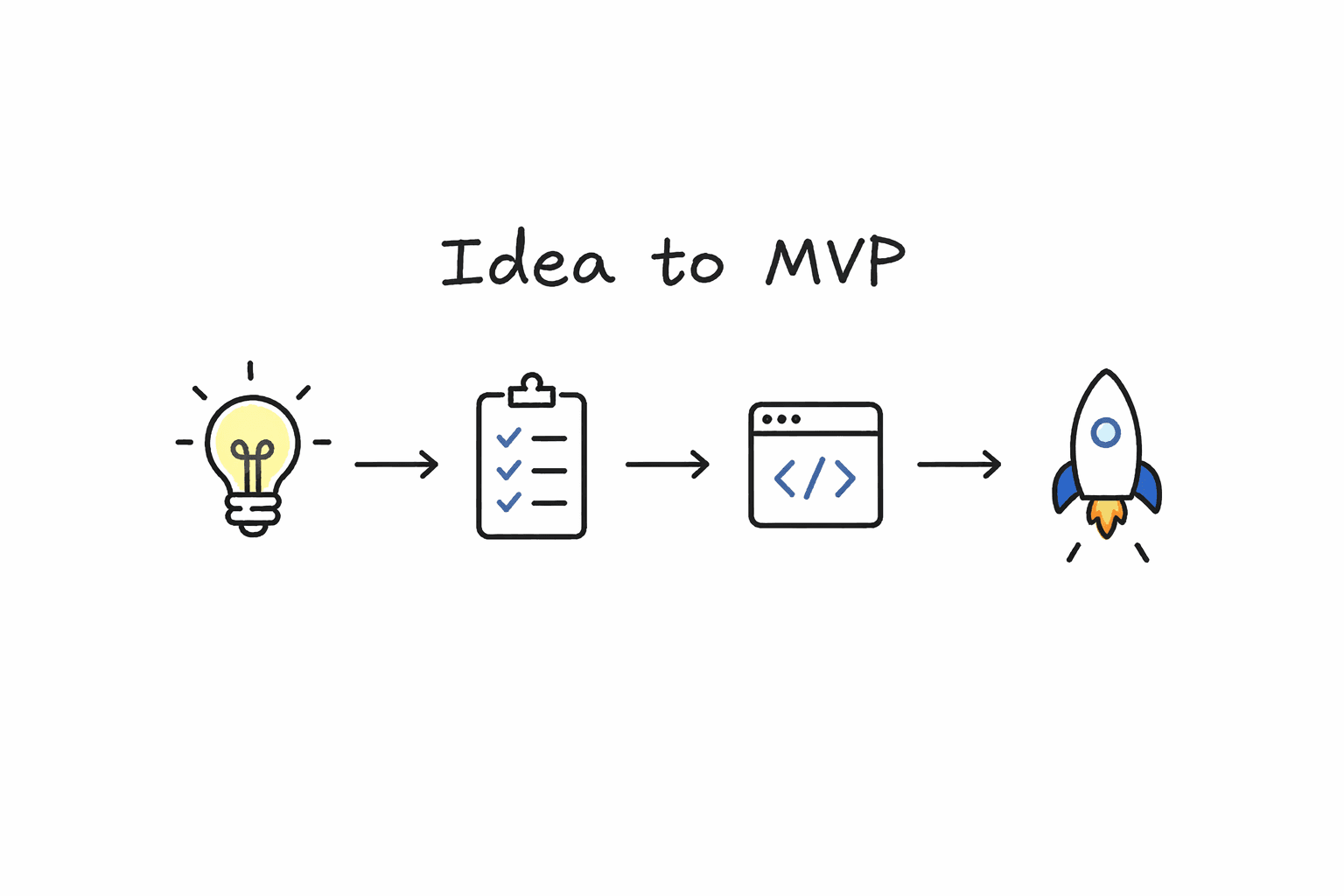
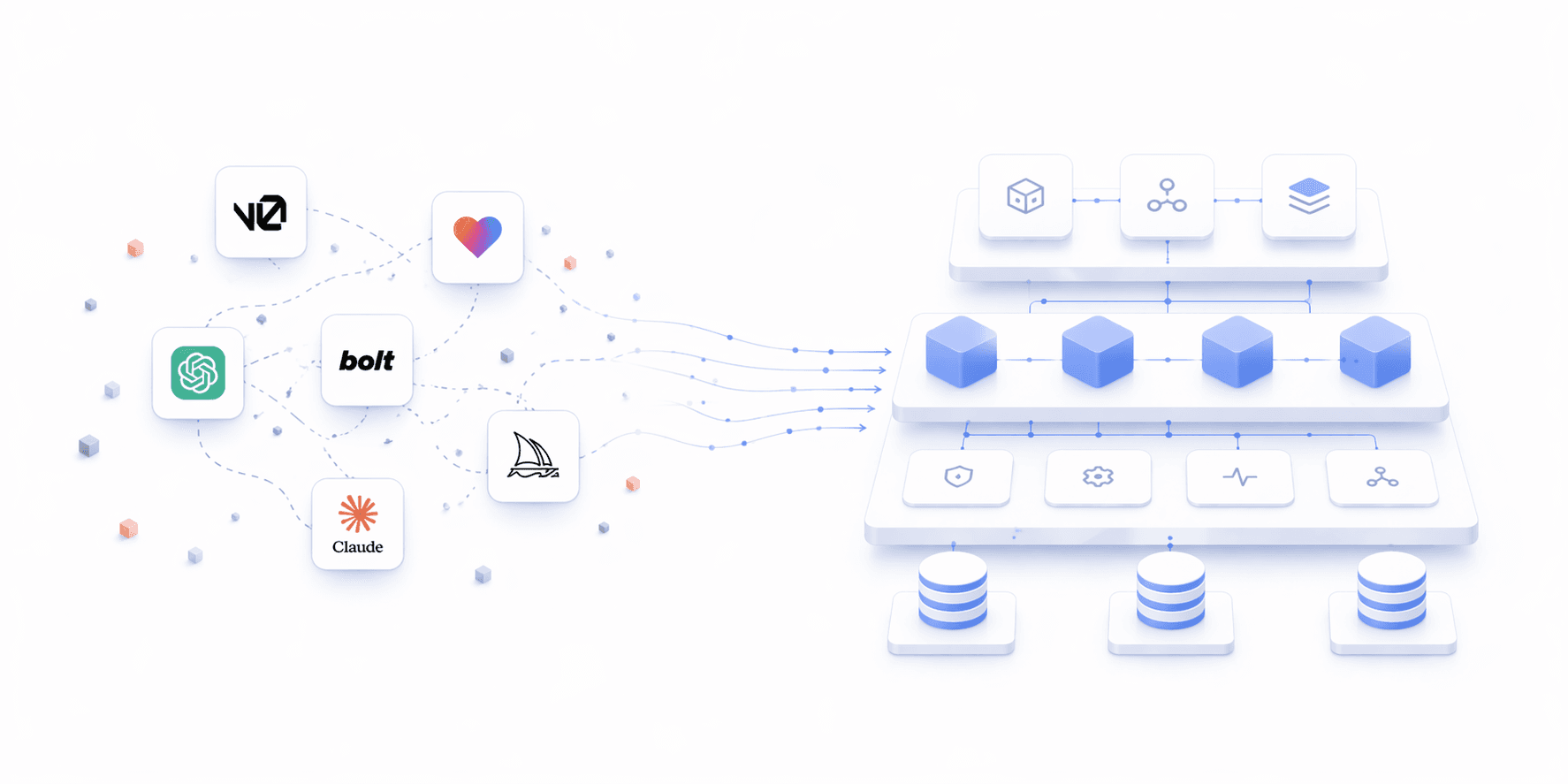
Loveable, v0, and other vibe-coding tools are useful because they compress the time between idea and visible product.
That is valuable.
The problem starts when a prototype becomes the production baseline without anyone stopping to define:
- system boundaries
- data ownership
- state flow
- deployment rules
- error handling
- observability
- code ownership
That is why many AI-generated apps feel impressive in week one and fragile in week six.
The UI is there. The product system is not.
Prototype quality and production quality are different things
A prototype only needs to answer a few questions well:
- can we visualize the product?
- can we test the core workflow?
- can we get feedback quickly?
A production product has a different job:
- protect user data
- handle real auth and permissions
- survive failed requests and partial outages
- support clean deployment across environments
- let another developer make changes without fear
That is why founders should not ask, "Does the prototype work?" The more useful question is, "Can this product survive real users, real changes, and real operations?"
The first production question is not "what stack?"
The first production question is:
What are the stable boundaries of this product?
Before anything else, define these five layers:
- frontend UI and route structure
- shared business logic
- backend and data access
- auth and permissions
- infrastructure and deployment
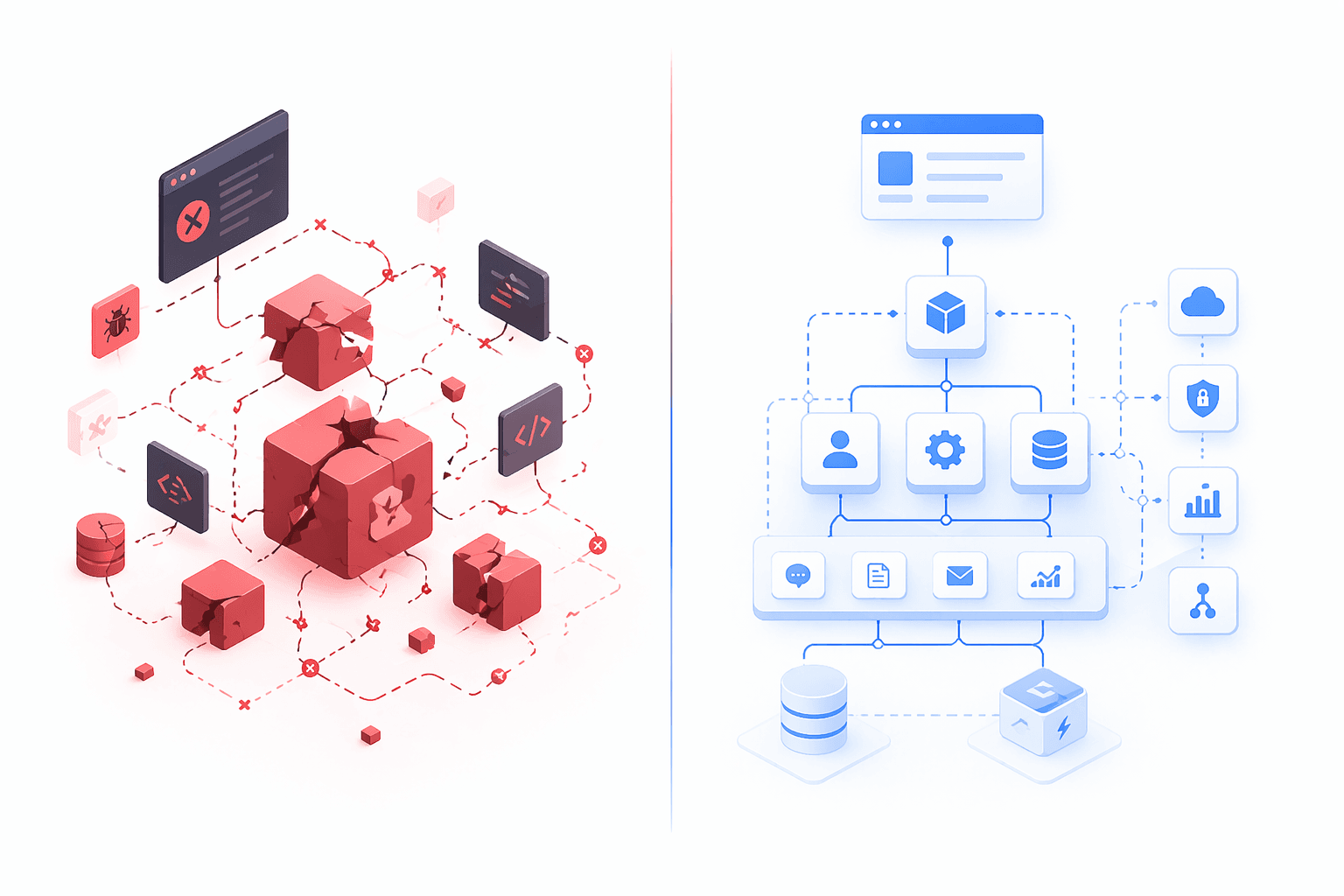
If those layers are mixed together, the app gets harder to change every time you add a feature.
This is the most common issue we see in vibe-coded apps: the prototype works, but responsibilities are smeared across components, helper files, client state, and ad hoc API calls.
Where vibe-coded apps usually break first
In real projects, the visual layer is rarely the first crisis.
The failures usually show up in these places:
Auth and permissions
- protected routes are inconsistent
- admin logic lives in the client
- role checks are duplicated
- session edge cases are not handled
Data design
- the schema grew reactively
- naming is inconsistent
- relationships are unclear
- analytics and reporting were never considered
Runtime behavior
- loading states are improvised
- retries are missing
- API contracts drift
- form validation happens only in the browser
Operations
- env vars are scattered
- staging and production differ unpredictably
- errors are not tracked
- rollback is unclear
Those are not cosmetic issues. They are the things that turn a promising app into a support burden.
A production-ready structure for AI-generated apps
For most startup apps, the cleanup target is not complicated. It is disciplined.
A healthy production structure usually means:
- routes and screens are thin
- business logic lives outside UI components
- data fetching is centralized
- schema validation exists at system boundaries
- auth checks are explicit
- environment variables are controlled
- logging and monitoring are installed
- feature flags or staged rollout paths exist for risky changes
If those pieces exist, the app becomes maintainable.
If they do not, every change feels random.
Production Ready Means Predictable
Production readiness is less about enterprise complexity and more about whether your team can make changes without guessing what will break.
The progression we recommend: prototype to production in stages
Founders do not need to jump from "rough prototype" straight to "enterprise platform."
The cleaner path usually looks like this:
Stage 1: prototype
Goal: prove the workflow, show the concept, get feedback quickly.
Stage 2: validated MVP
Goal: keep the useful product flow, tighten the data model, and make the app stable enough for real early users.
Stage 3: production baseline
Goal: establish explicit auth, backend boundaries, environment discipline, logging, and release safety.
Stage 4: scaling product
Goal: optimize performance, introduce queues or caching where needed, and improve observability and team maintainability.
That progression keeps the speed benefit of AI-assisted building without pretending the prototype is already production-ready.
The exact cleanup path we use at LaunchFast
When founders bring us a Loveable, v0, or vibe-coded product, we usually do not start with a rewrite pitch. We start with an audit.
The audit asks:
- what already works and should be kept
- where the product logic actually lives
- where auth and data boundaries are unsafe
- which parts are duplicated or hallucinated
- what can be hardened quickly versus rebuilt cleanly
Then we usually move through this sequence:
- stabilize the data model and API contracts
- clean up auth, permissions, and environment handling
- separate UI from product logic
- replace fragile state and side-effect patterns
- add error handling, logging, analytics, and deployment discipline
- only rewrite the parts that are actively dangerous or impossible to maintain
That approach preserves momentum. It also avoids the founder trap of paying twice for the same product.
If you are still earlier in the product journey, our idea-to-launch playbook helps define what should exist before this hardening phase even starts.
What usually needs to be fixed first
In real AI-generated apps, the highest-risk issues are usually not visual.
They are usually:
- duplicated backend logic
- client-side secrets or unsafe env handling
- missing validation on forms and APIs
- weak database schemas
- mixed auth and role checks
- no retry or failure handling
- no staging workflow
- no monitoring
Those are the parts that turn a launch into a support burden.
That is why a production pass should focus on behavior and maintainability first, not cosmetic refactoring first.
How to decide whether to harden or rewrite
This is one of the biggest founder questions, and the answer is usually commercial as much as technical.
Harden the existing prototype when:
- the core workflow is right
- the product is already getting useful feedback
- the schema is recoverable
- the app mostly suffers from structure problems
- the cleanup cost is lower than a rebuild
Rewrite more aggressively when:
- auth boundaries are unsafe
- the data model is deeply broken
- the code is too duplicated to reason about
- the app cannot support the next stage of scope
- deployment is already unstable
The worst choice is drifting in the middle for months, patching obvious problems without deciding whether the product is being rescued or replaced.
How to organize the codebase after the cleanup
The exact folder names can differ, but the shape should be clear.
For example:
apporroutesfor pages and route-level layoutcomponentsfor reusable UI piecesfeaturesfor domain-specific flowslibfor shared utilities and clientsserverorapifor server-only logicschemasfor validation contractsintegrationsfor vendor-specific adapters
This matters because AI-generated code often produces files that are technically runnable but structurally flat. Everything talks to everything. That is what needs to stop before the team scales usage or headcount.
Production readiness also means operational readiness
Many founders think code cleanup ends when the code looks cleaner.
It does not.
You also need:
- staging and production environment separation
- secret management
- backups and rollback paths
- analytics for key product actions
- error tracking
- uptime monitoring
- release discipline
This is especially important if the original app was assembled quickly with tools that optimized for visible output instead of operational depth.
If you skip this layer, the app may still "work" until real users or real traffic arrive. That is often when teams discover they need the same backend discipline described in how we built a scalable backend handling 1M requests.
The founder mindset that works best here
Treat Loveable, v0, and vibe coding as acceleration tools, not as proof that engineering structure no longer matters.
They are great for compressing ambiguity.
They are not a replacement for:
- architecture
- ownership
- testing discipline
- runtime safeguards
- maintainable delivery
That is the same pattern we follow in from idea to launch. Early speed is valuable only if the next stage of execution is structured enough to support real users.
What founders should do next
You do not need to be embarrassed that an AI tool helped create the app.
You do need to be honest about what stage the app is in.
If it is a prototype, treat it like a prototype.
If it is moving toward production, then give it production boundaries before traffic, customers, and integrations force the issue.
That transition is where many teams lose time. It is also exactly where a disciplined cleanup process creates leverage.
If you want help deciding whether your current prototype should be hardened, partially rebuilt, or fully re-platformed, contact LaunchFast. If you want to see the kind of products we help ship, browse our projects.
Read Next
If this topic is relevant to your roadmap, these related articles are worth reading next.
From Idea to MVP in 30 Days: Exact Process We Use to Launch Startup Products
The founder-friendly path from rough concept to live product, including validation, MVP scope, stack choices, launch sequencing, and where execution usually goes wrong.
How We Built a Backend That Handles 1M Requests Without Scaling Costs Exploding
What it takes to support 1M requests without panic: modular architecture, protected databases, background jobs, observability, and better scaling tradeoffs.
How to Build a Scalable SaaS Backend
How founders should think about multi-tenant backend design, startup tech stack choices, and scaling a SaaS product without overengineering it.
Next Step
Need help turning an AI-generated prototype into a product your team can trust?
We help founders audit, harden, and ship Loveable, v0, and vibe-coded apps without wasting months on an unnecessary rewrite.
FAQ