
Key Takeaways
- AI works best when paired with a defined workflow, not as a generic add-on.
- The biggest wins usually come from reducing repetitive review, data entry, and follow-up work.
- Human approval, confidence checks, and measurable ROI matter more than AI novelty.
Start with a painful workflow that already wastes money
AI automation for business works best when the workflow is already painful before AI enters the conversation.
That means there is usually too much of one or more things:
- Manual copying and pasting
- Repetitive checking
- Slow handoffs between people
- Delayed follow-up
- Too much admin work for high-value staff
If the process is already messy, expensive, and repeated every week, there is usually strong automation potential.
What does not work as well is adding AI to a process nobody cares about. That creates demos, not ROI.
Map the workflow before you automate it
The first thing we do is not model selection. It is workflow mapping.
We want to know:
- What triggers the process?
- What data comes in?
- What decision needs to be made?
- What output gets produced?
- Where does the work currently slow down?
Once that is clear, automation becomes much more practical.
Some steps may need AI. Some may only need rules. Some may need a clean dashboard. Some may need a person to approve edge cases.
That blend matters. Businesses do not need a magic system. They need a reliable one.
The Real Goal
Automation is not about replacing people everywhere. It is about removing low-value repetition so people can focus on decisions that actually grow the business.
Use AI where judgment is fuzzy, and rules where judgment is fixed
This is where many automation projects go wrong.
Teams try to use AI for everything, even when simple logic would do the job faster and cheaper.
The better split looks like this:
- Use rules for routing, status changes, alerts, and fixed conditions
- Use AI for classification, extraction, summarization, and draft generation
- Use humans for approval when the output affects money, compliance, or customer trust
That structure keeps cost controlled and reliability high.
It also helps founders understand the real value of the system. Instead of saying "we added AI," you can say "we cut a two-hour workflow down to fifteen minutes."
Build around review queues, not black-box decisions
Most small business automation projects fail when founders expect full autonomy too early.
A better pattern is to let the system handle the easy work automatically and send the uncertain cases into a review queue.
That means the system should know when to:
- Auto-complete the task
- Ask for more data
- Flag the item for review
- Escalate the case to a team member
This is how AI becomes operationally useful instead of risky.
It is the same logic we use when designing AI integration patterns that make SaaS products better. Reliability and workflow fit matter more than model hype.
Measure the result in time saved and faster throughput
Founders should not judge automation by how impressive it looks.
They should judge it by:
- Hours saved each week
- Speed of turnaround
- Reduction in manual errors
- Faster customer response
- Better operating margin
If the system looks smart but still creates hidden cleanup work, it is not finished.
The real win is when the business can handle more volume without hiring at the same pace.
AI automation is strongest when it fits the economics of the business
The best automations are usually attached to a revenue or cost lever:
- Faster lead follow-up
- Faster order handling
- Faster internal approvals
- Less manual reporting
- Less operational overhead
That is why founders should think about automation as a business system, not a tech experiment.
If the workflow is important, repeated, and expensive, AI can create a strong return. If the workflow is vague, low-volume, or poorly defined, automation will struggle no matter how good the model is.
Done well, AI automation gives small teams leverage. That leverage is what helps founders move faster without letting operations become the bottleneck.
Read Next
If this topic is relevant to your roadmap, these related articles are worth reading next.
AI Integration Patterns That Make SaaS Products Better
The AI product patterns that increase speed, usefulness, and retention when they are tied to real workflows instead of novelty features.
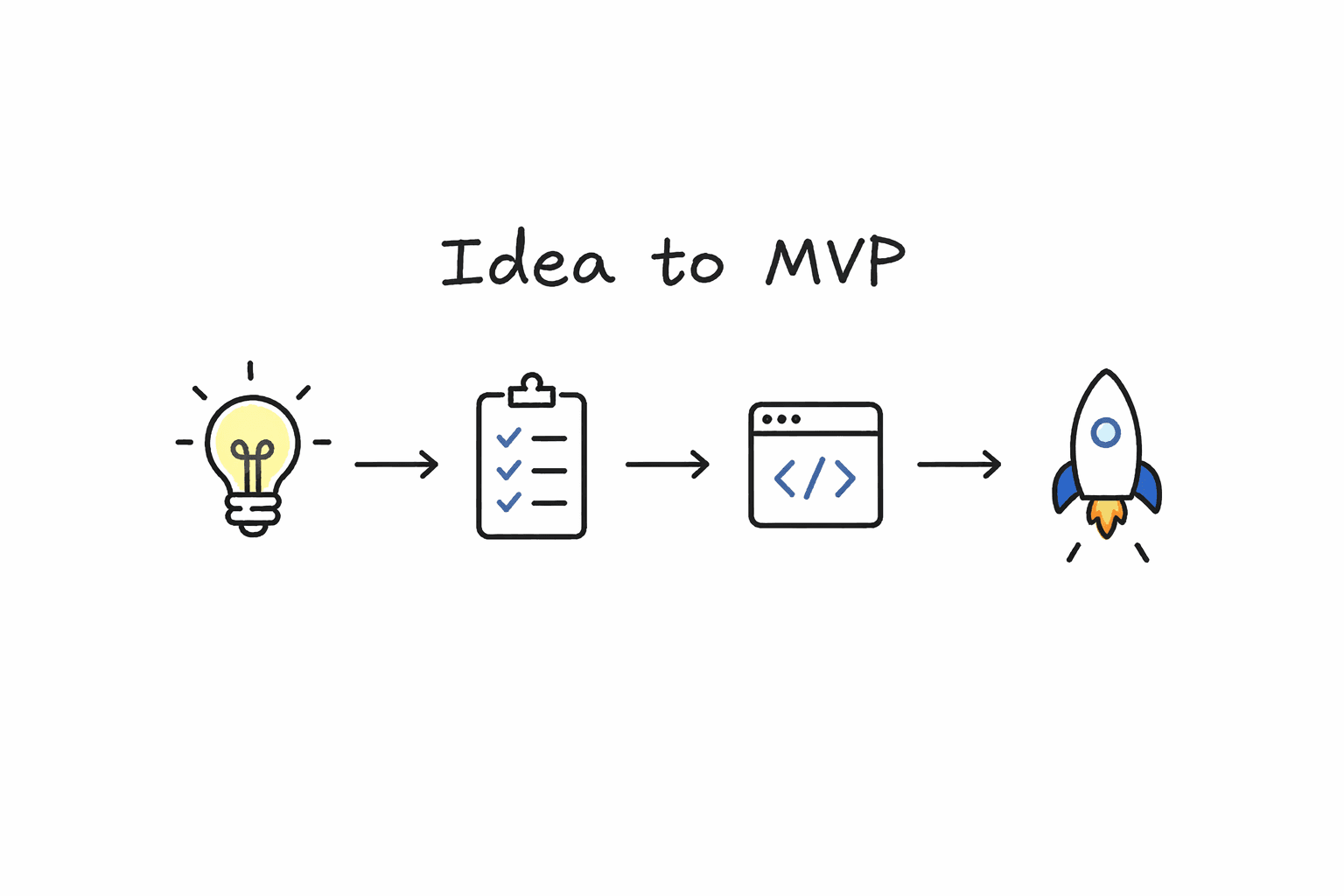
From Idea to MVP in 30 Days: Exact Process We Use to Launch Startup Products
The founder-friendly path from rough concept to live product, including validation, MVP scope, stack choices, launch sequencing, and where execution usually goes wrong.
How SaaS Teams Reach First MRR Faster
A focused playbook for finding the shortest path from product idea to paying customers with tighter scope, sharper positioning, and faster execution.
Next Step
Need help building your product?
Talk to our team about AI automation, workflow mapping, and where automation will actually save time in your business.
FAQ