Key Takeaways
- Growth gets easier when positioning, sales, and onboarding work as one system.
- Early-stage teams need repeatable channels, not scattered experiments.
- Tighter onboarding improves both acquisition efficiency and retention.
Acquisition gets easier when the offer is obvious
Customer acquisition breaks down when the product sounds broad, generic, or interchangeable. If the offer is unclear, every channel becomes more expensive because buyers need more explanation before they trust the next step.
That is why positioning is not branding decoration. It is acquisition infrastructure.
When the offer is clear, outreach improves, paid tests become easier to judge, landing pages convert better, and demos begin from a stronger baseline. The same message should carry through every stage of the journey.
One acquisition loop is better than six weak channels
Early-stage SaaS teams often start too many channels at once. A little content, a little cold outreach, a little paid traffic, a little product-led motion. The result is scattered learning and low confidence.
The stronger approach is to build one loop first:
- A clear audience and problem statement
- A repeatable way to reach those buyers
- A landing page or demo path that qualifies interest
- An onboarding flow that produces a first win
- Feedback that loops back into the offer
Once one loop works, expansion becomes much easier.
Content should support sales, not drift away from it
Many startup blogs fail because the content sounds interesting but does not help a qualified buyer move closer to a product conversation.
Useful content for early-stage SaaS should answer the questions buyers ask before a trial, before a demo, or before internal buy-in. That content can rank in search, but its real job is to reduce uncertainty.
This is where internal linking matters. If a reader lands on a detailed article and sees no path toward the product or a related guide, the visit stays informational and the system loses momentum.
Onboarding is part of acquisition
Founders often treat onboarding like a retention issue. In reality, it affects acquisition too.
If the first post-signup experience is confusing, every acquisition channel becomes less efficient. Sales conversations become harder to close, trial traffic becomes more wasteful, and word-of-mouth weakens because the first experience does not feel smooth.
Early-stage teams should build onboarding with the same seriousness they apply to the landing page:
- Show the first success step immediately
- Reduce the number of setup decisions
- Remove empty states where possible
- Make support easy to reach
Build proof assets while you build the product
Trust compounds. The sooner you collect proof, the easier acquisition becomes later.
Proof does not need to mean enterprise case studies. It can start with:
- Strong before-and-after examples
- A clear founder point of view
- Small metrics from pilot users
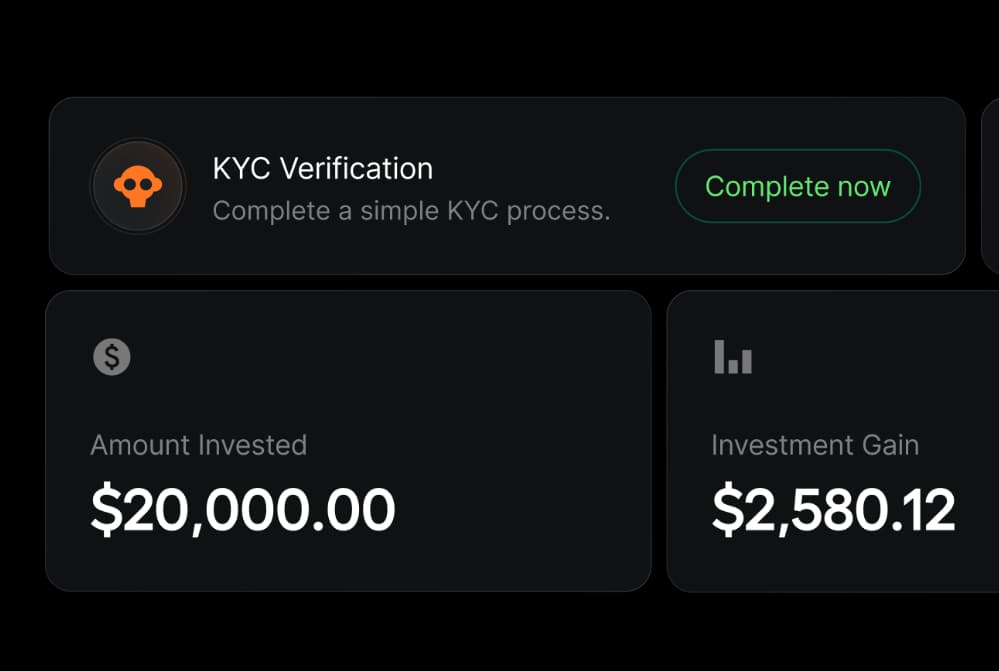
- Screenshots that show the product solving a real workflow
These assets strengthen ads, outbound, landing pages, demos, and blog content at the same time.
Product and acquisition should share the same metrics
The cleanest systems track product and commercial health together. Instead of splitting growth and product into separate worlds, use shared visibility:
- How many qualified visitors reach the key CTA?
- How many signups reach first success?
- Where do early users stall?
- Which message attracts low-fit users versus high-fit users?
If your team learns from those questions every week, acquisition becomes less random.
The best early systems are boring in the right way
A scalable acquisition system is not chaotic. It is usually simple:
- A clear offer
- A narrow buyer
- One or two channels that you understand
- Strong onboarding
- Useful content connected to the commercial journey
That foundation is much more valuable than chasing volume too early.
Read Next
If this topic is relevant to your roadmap, these related articles are worth reading next.
How SaaS Teams Reach First MRR Faster
A focused playbook for finding the shortest path from product idea to paying customers with tighter scope, sharper positioning, and faster execution.
Mobile App Launch Playbook for Startups
The mobile launch playbook for startup teams that need a tight MVP scope, clean release flow, and a product foundation ready for real users.
From Vibe-Coded Prototype to Production App: What Most Founders Get Wrong
How to turn a fast AI-generated prototype into a stable product with better architecture, auth, data boundaries, observability, and release discipline.
Next Step
Want acquisition systems built into the product from day one?
We help SaaS teams connect product, messaging, and conversion flows into one usable growth engine.